Beef Stir Fry with Glass Noodles (Japchae)

Aug 12, 2022
This post may contain affiliate links. Please read our disclosure policy.
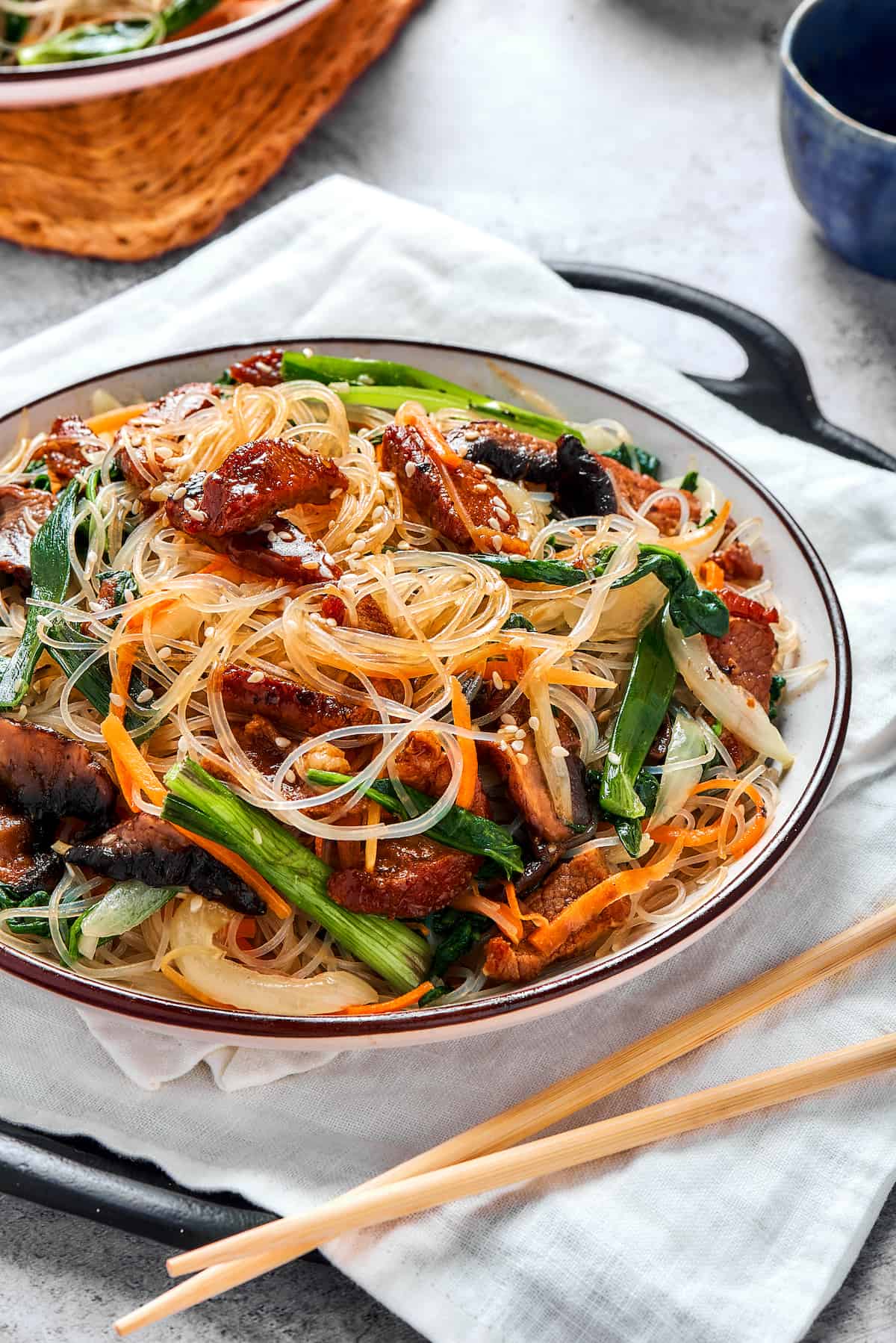
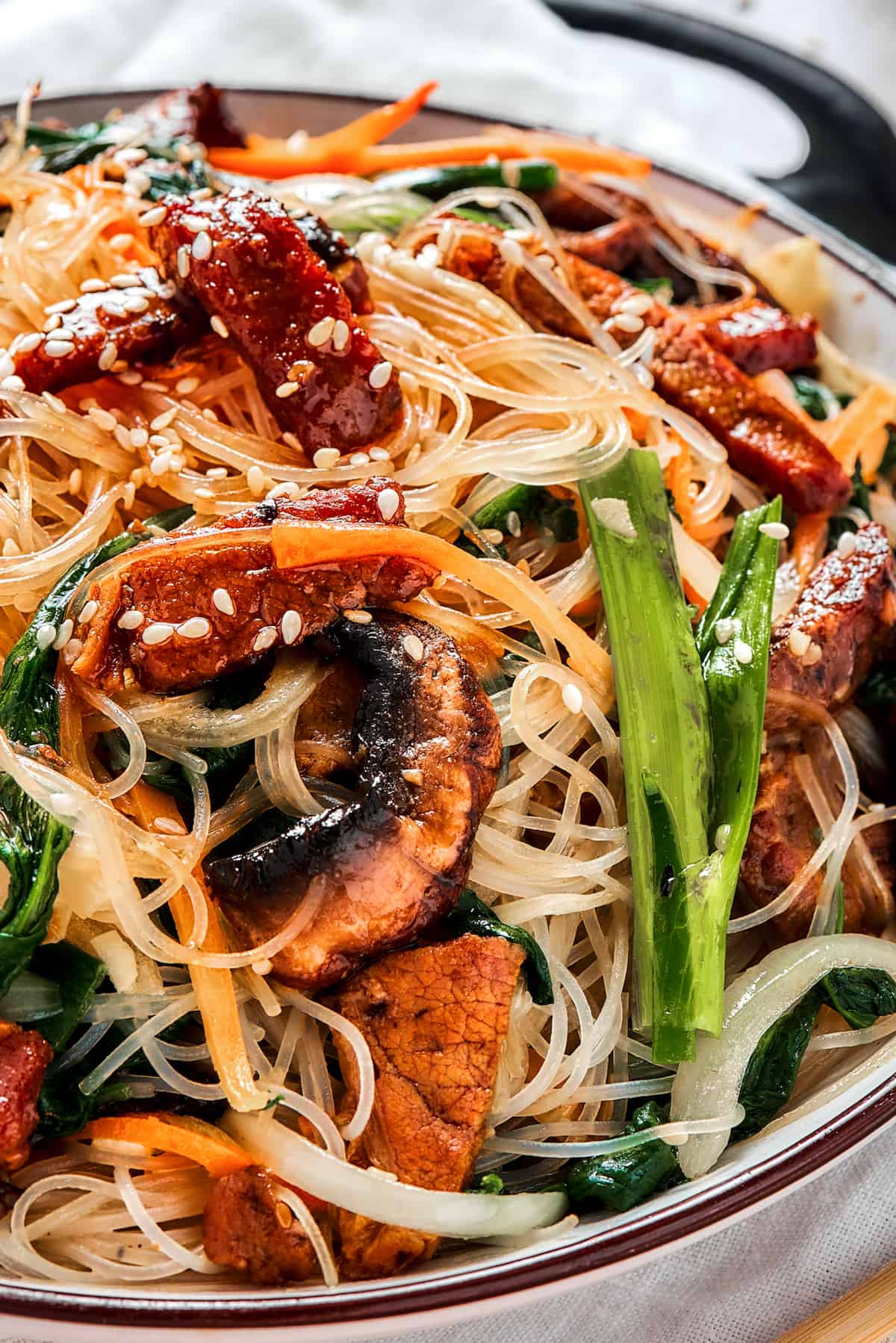
Beef Stir Fry with Glass Noodles (Japchae) is a beloved Korean classic prepared with steak, veggies, and oodles of springy glass noodles. The sweet-and-savory sauce only takes five simple ingredients!
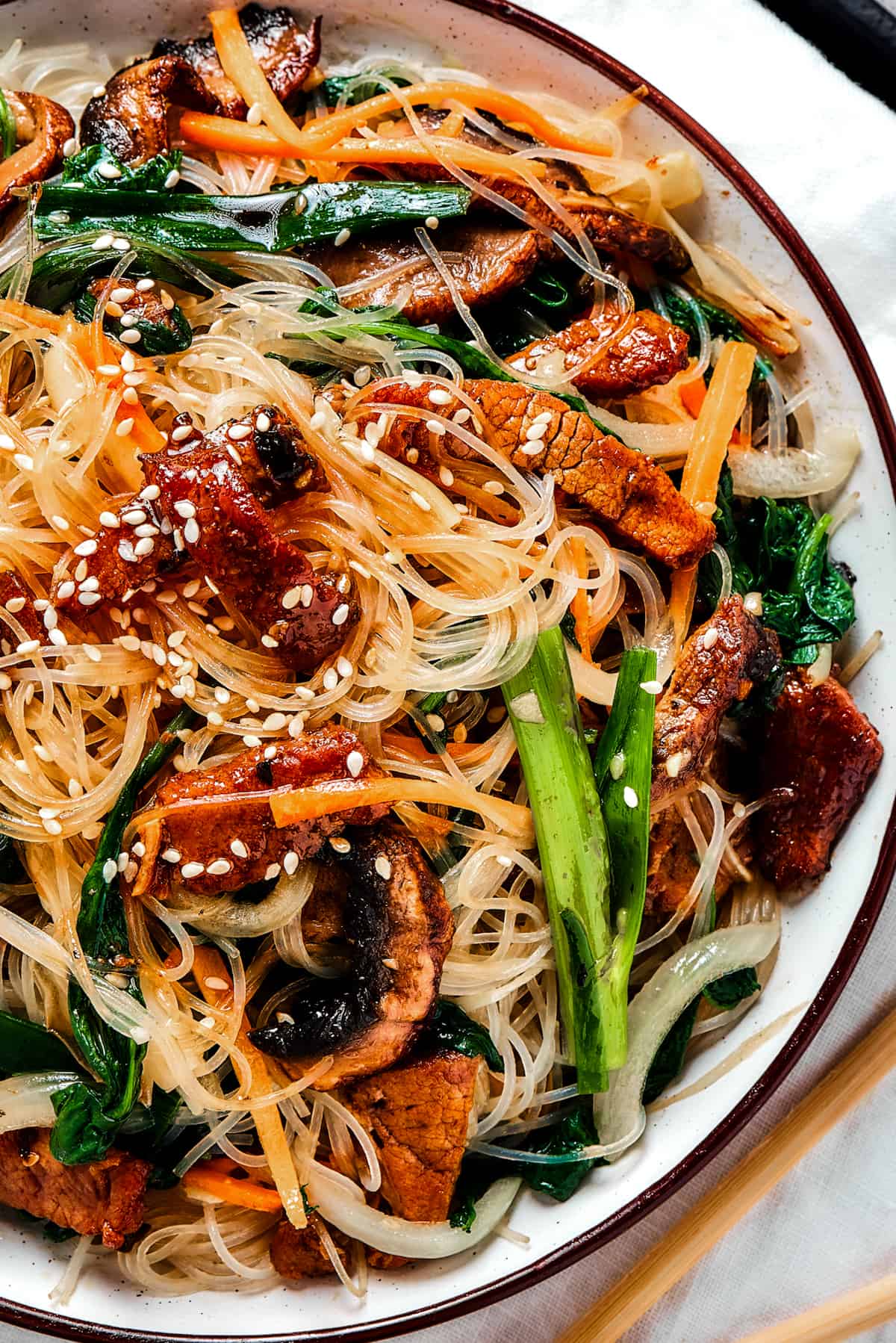
Stir-Fried Noodle Dish
Beef stir-fry with glass noodles is a Korean dish known as Japchae. It’s extremely popular in Korea for everything: from major holidays to get-togethers, to simple family dinners. And once you taste it, you’ll see why – this dish has everything!
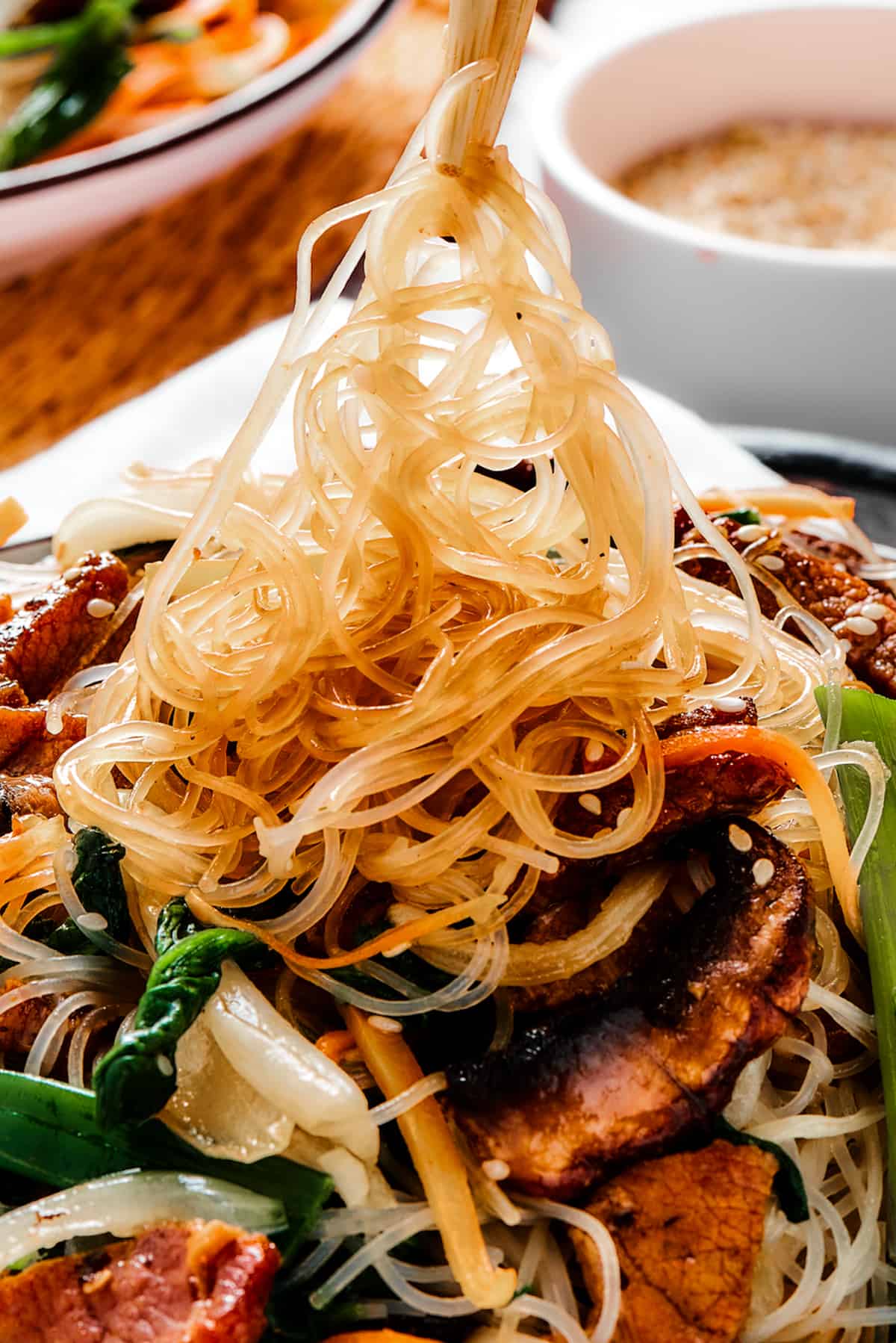
For starters, there are the noodles: clear, springy, and made for absorbing sauces, glass noodles are addictively delicious. If you’ve never tried them or cooked with them, you are going to love their unique texture and mild flavor.
Then there’s the sauce. It’s a great balance of salty, savory, and lightly sweet, and allows each vegetable (and all that tender beef) to really shine, while giving the dish a mouthwatering sesame-soy taste.
Oh, and did I mention the beef? This is a steak dish, so you’ll be slicing up some good grilling steak. Some recipes even use filet mignon, but I think that thinly-sliced flank steak or sirloin steak works really well.
Are Glass Noodles Healthy for You?
Glass noodles are surprisingly similar to wheat pasta in terms of nutrition. They tend to have more carbs, but fewer overall calories – but the difference is not very significant. If you’re looking for a noodle dish that’s different from ordinary pastas, try this recipe!
Glass noodles are also gluten-free most of the time, since they are made without wheat. However, be careful and always check your package of glass noodles to make extra sure.
If you’re trying to stay low-carb, keep in mind that glass noodles are not low in carbohydrates and should only be eaten sparingly (or replaced with zucchini noodles or similar).
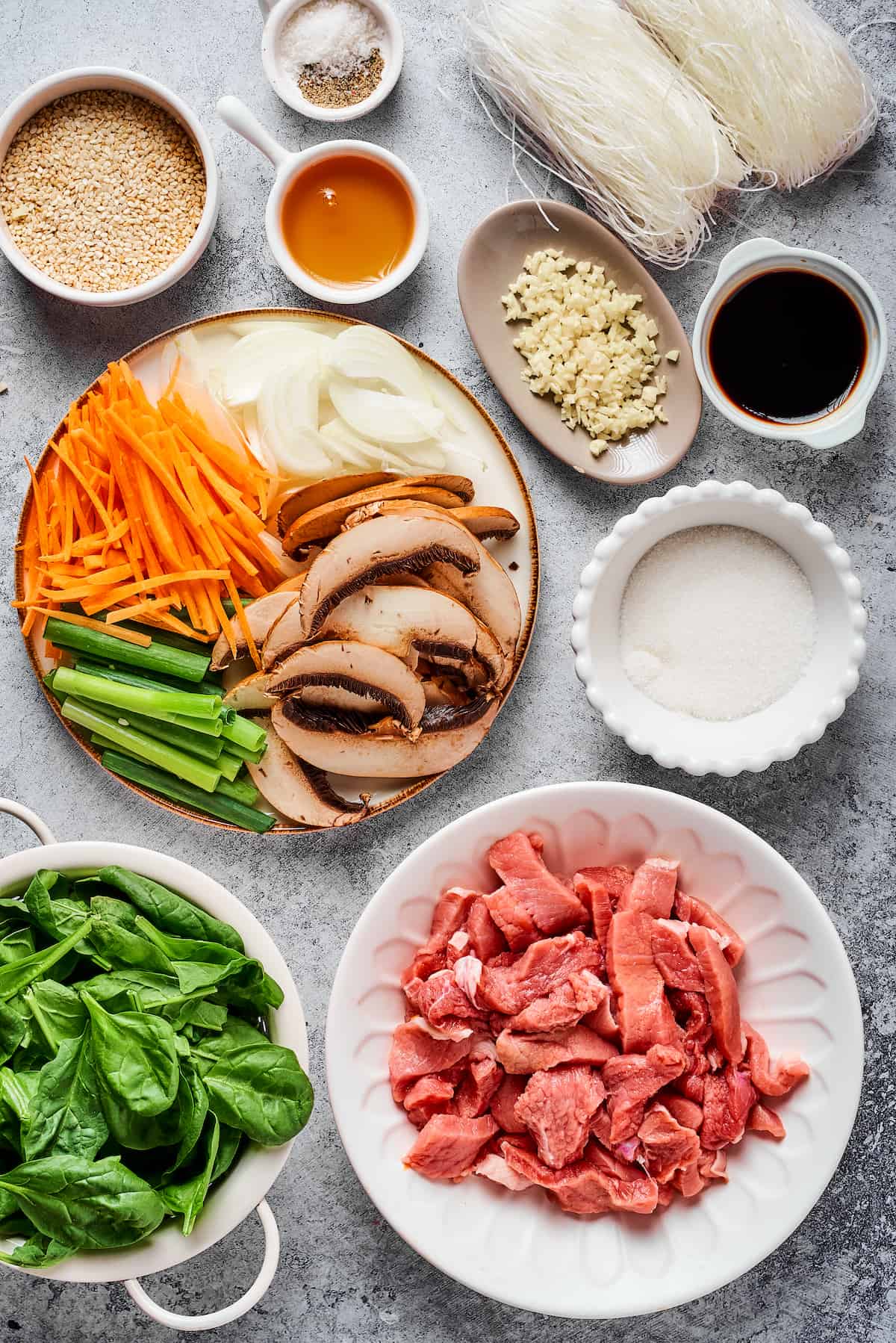
Ingredients For Japchae
For the Stir Fry
- Glass Noodles: Glass noodles can be made with various ingredients, like mung bean, but for this recipe we’re using Korean potato starch noodles.
- Beef: You’ll need a pound of good grilling steak, like flank steak.
- Carrots: Cut these into matchsticks, or buy pre-cut carrot matchsticks.
- Onion: Thinly slice a small onion.
- Mushrooms: I like to use portobello, but shiitake or oyster mushrooms would be great as well.
- Spinach: Baby spinach is nice because the leaves are small, and don’t need to be cut. If you use regular spinach, make sure to tear or cut the leaves into bite-size.
- Green Onions: Remove the roots and any withered tips, and chop the rest into bite-sized pieces.
- Olive Oil: Or peanut oil, vegetable oil, avocado oil, etc. For stir-frying.
- Salt and Pepper
For Seasoning
- Soy Sauce: Tamari or coconut aminos can be used, if preferred.
- Sesame Oil: Usually found on the international foods aisle, but can also be found with the other oils like olive oil.
- Sugar: Just a few spoonfuls.
- Garlic: Minced or pressed.
- Toasted Sesame Seeds: Add some to the seasoning mixture, and have more on hand for garnish.
How to Make Beef Stir Fry with Glass Noodles
Making this dish is not difficult, in spite of the number of ingredients and steps. However, it would be helpful to read through the recipe a few times before you get started, to familiarize yourself with the process.
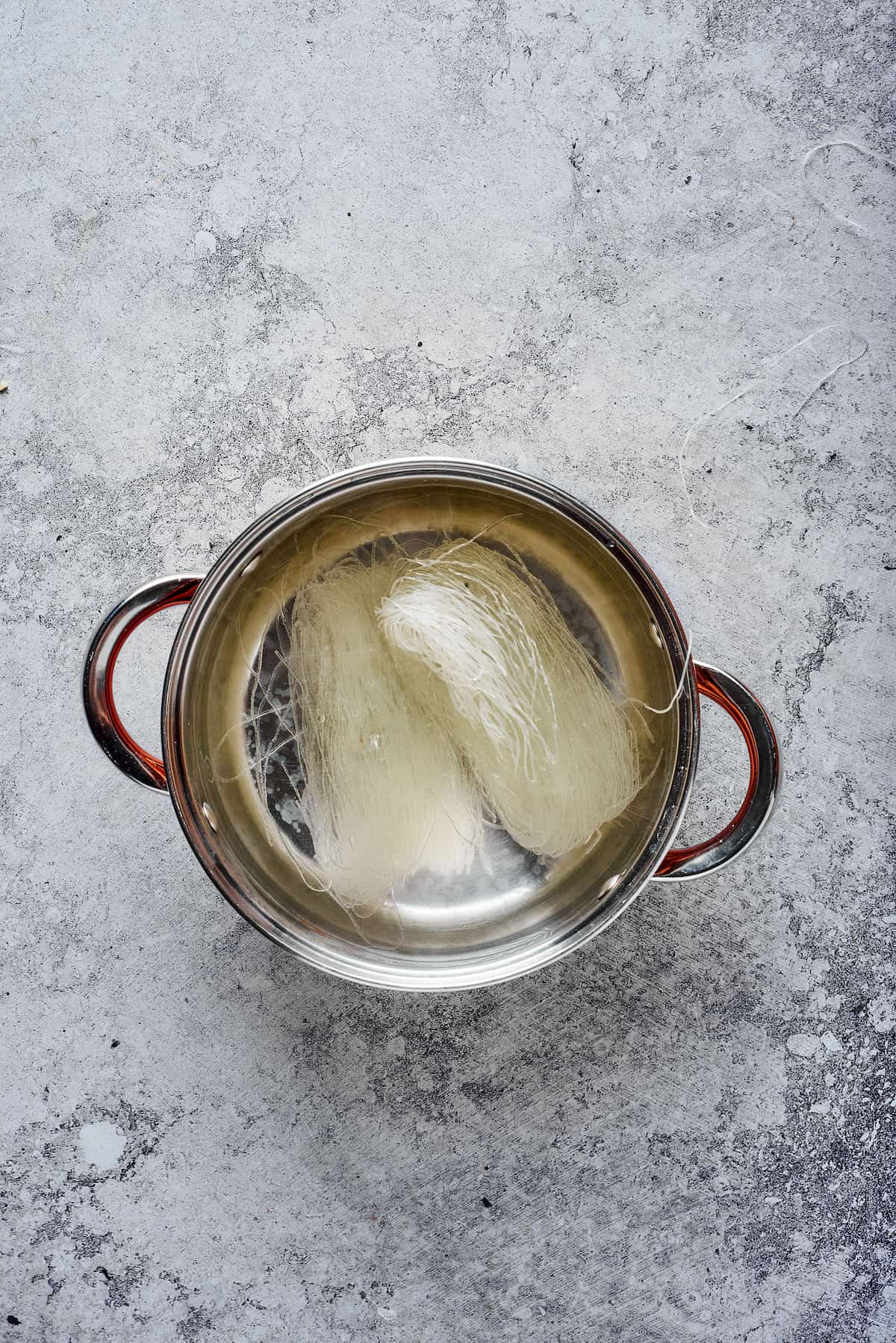
- Prepare the noodles. Soak the glass noodles in hot water according to the package directions, then rinse under cold water and drain well. Toss them with a little of the seasoning mixture.
- Season the beef. Toss the sliced beef with a few tablespoons of the seasoning and set it aside while you prep the vegetables.
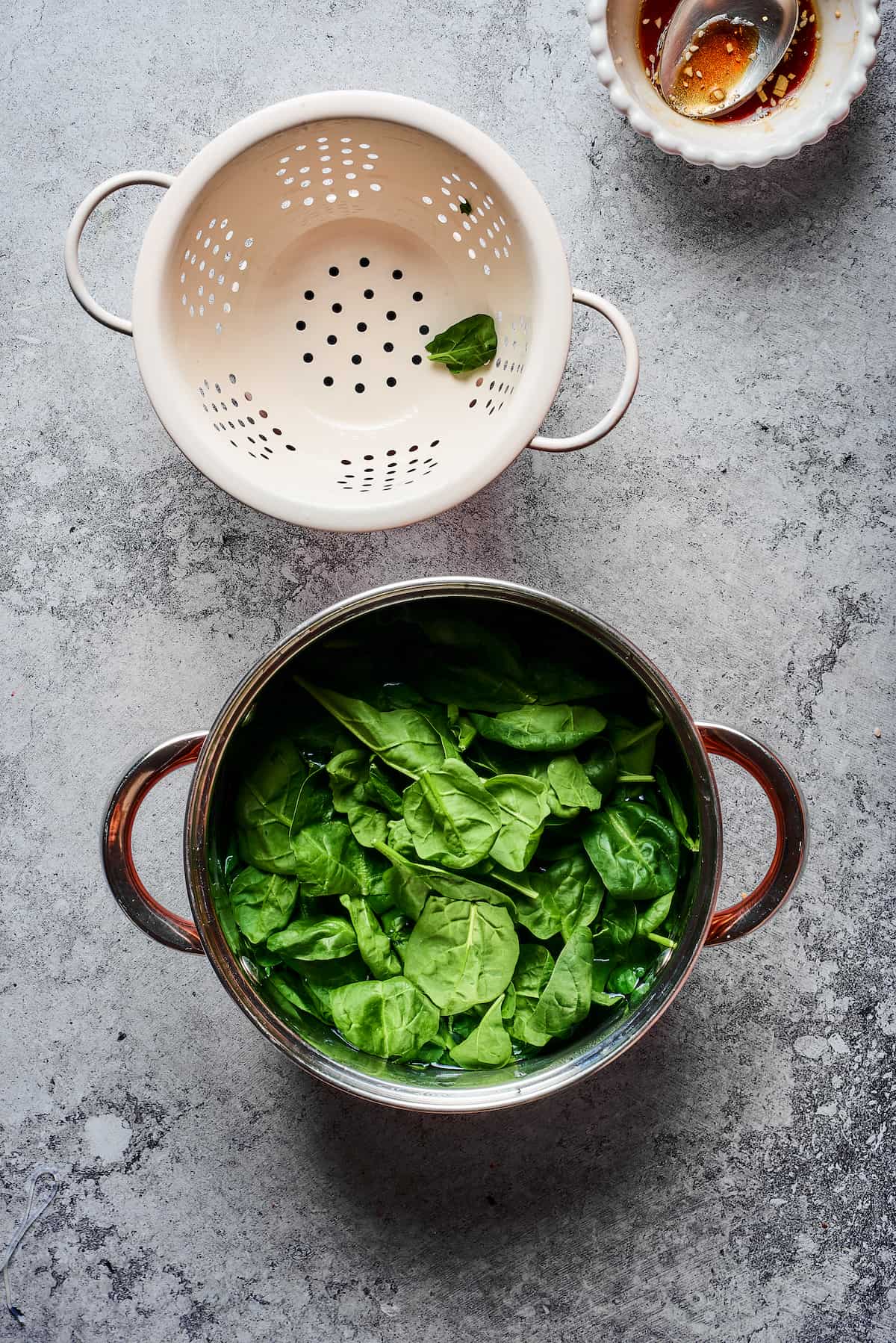
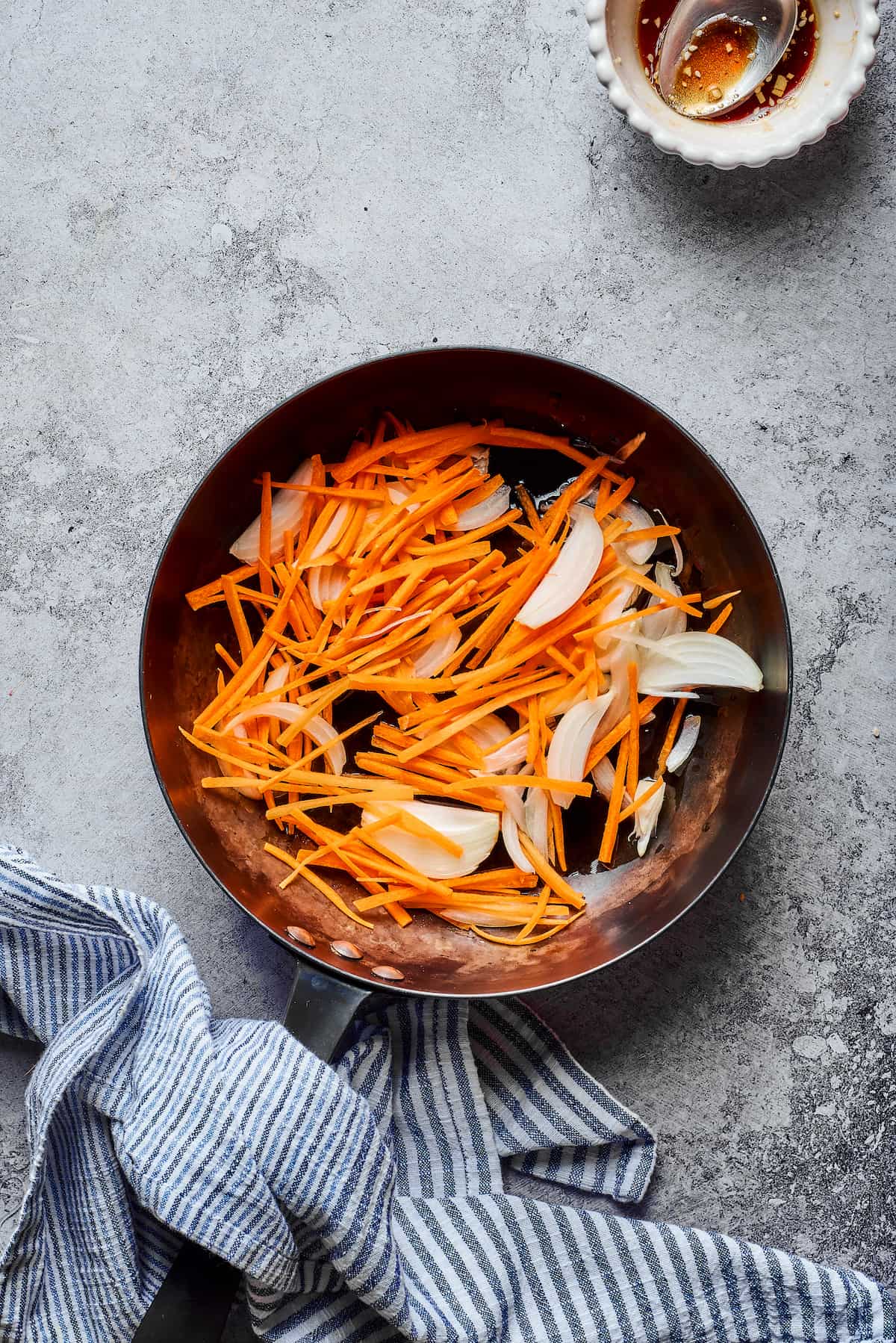
- Cook the vegetables. Blanch the spinach until wilted, then drain it well. Sauté the carrots and onions for a couple of minutes and transfer them to a plate.
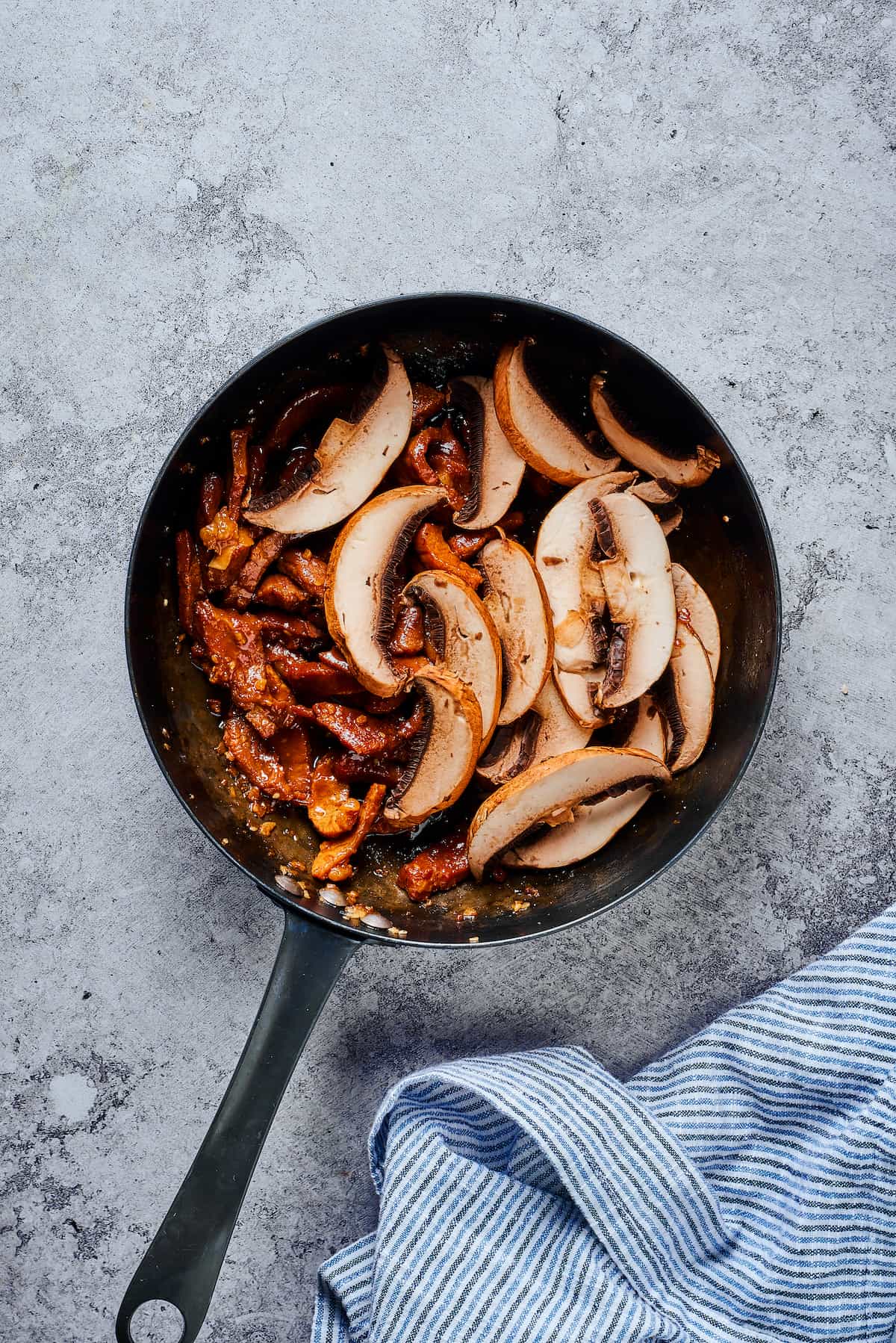
- Cook the beef and mushrooms. Stir-fry the beef over medium-high heat until cooked through. Add the mushrooms and cook until tender.
- Add the noodles. Toss the noodles and remaining seasoning into the skillet with the beef and mushrooms. Cook until the noodles have absorbed the sauce.
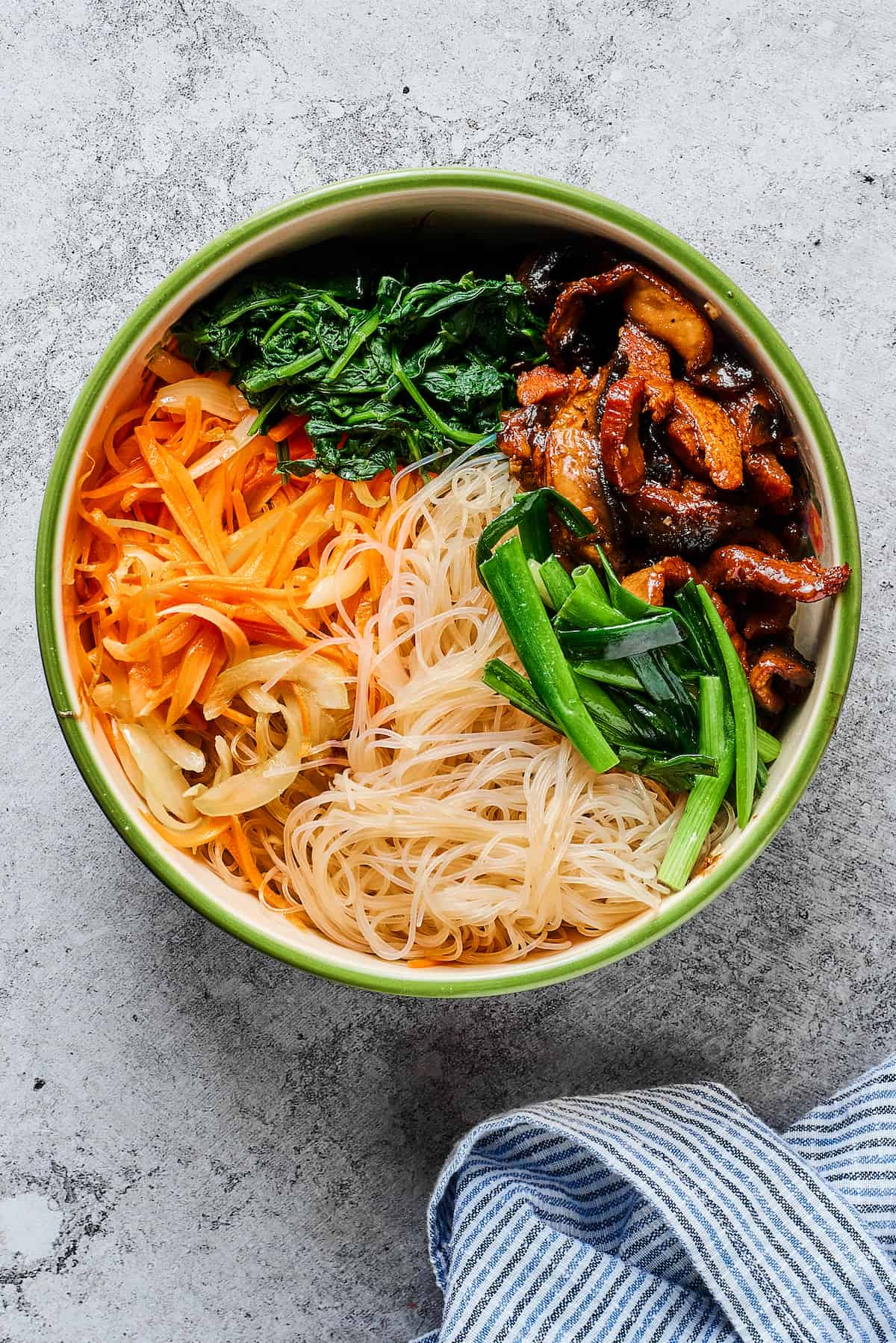
- Bring it all together. Toss the noodle mixture with the spinach, carrots, onions, and green onions. Season to taste and finish with sesame seeds and a drizzle of sesame oil.
Recipe Tips
- Prep everything first. Slice the beef and vegetables and mix the sauce before you start cooking. Once you get to the skillet, everything moves pretty quickly.
- Cook in batches. The vegetables, beef, and noodles are cooked separately so each one gets the right texture. It takes a few extra steps, but it’s worth it.
- Slice the beef thinly. Cut the steak into thin strips against the grain so it stays tender and cooks quickly.
- Don’t overcook the noodles. Glass noodles can get too soft if they sit in hot water too long, so follow the package directions and rinse them with cold water once they’re ready.
- Drain the spinach well. Give it a good squeeze after blanching so you don’t add extra water to the finished japchae.
Side Dish Ideas
Japchae works as a meal on its own, but it’s also great with a few easy appetizers or sides if you want to make a bigger spread.
- Soup: Serve a warm bowl of egg drop soup for a simple starter.
- Dumplings: Add these chicken potstickers for an easy appetizer or side.
- Spring rolls: Serve crispy veggie spring rolls alongside the japchae for a little crunch.
Beef Stir Fry with Glass Noodles (Japchae)
Ingredients
For Seasoning:
- 6 tablespoons low sodium soy sauce
- 4 tablespoons sesame oil
- 3 tablespoons sugar
- 3 cloves garlic,, minced
- toasted sesame seeds,, plus more for garnish
For the Stir Fry:
- 7 ounces Korean potato starch noodles,, (glass noodles)
- 1 pound flank steak,, cut into bite-sized pieces
- 2 cups bunch baby spinach
- 3 tablespoons vegetable oil,, divided
- 1 yellow onion,, thinly sliced
- 2 medium carrots,, cut into matchsticks
- 2 green onions,, root ends removed, cut into bite-sized pieces
- 4 to 5 fresh portobello mushrooms,, thinly sliced
- salt and freshly ground black pepper,, to taste
Instructions
- Mix all seasoning ingredients together in a small bowl.
- Bring a large pot of salted water to boil.
- When the water has come to a boil, remove it from the heat and place the noodles in it. Leave them in the hot water for 7 to 8 minutes, or follow the instructions on the package. Drain the water, and rinse briefly with cold water. Set aside.
- Place the beef pieces in a separate bowl, and season with about 3 tablespoons of your seasoning mixture. Set aside to marinate.
- Add 2 tablespoons of the seasoning to the drained and rinsed glass noodles. Mix well, until the noodles are evenly coated in the sauce. Set aside.
- Lightly blanch the spinach by adding it to a pot of boiling water with a pinch of salt, for about 30 seconds. Rinse under cold running water to stop the cooking process and preserve the spinach’s nutritional value. Drain and set them aside.
- Heat 1 tablespoon vegetable oil in a large skillet or wok set over medium heat; stir in the sliced onions, carrots, and green onions. Add couple pinches of salt, and cook for about 2 to 3 minutes, or until aromatic but still crisp; transfer to a plate and set aside.
- Pour a little more oil in the skillet, increase the heat to medium-high, and stir in the beef chunks; cook for about 4 to 5 minutes, or until cooked through.
- Next, add the sliced mushrooms to the beef. Cover and cook for 3 minutes, or until the mushrooms are tender and cooked.
- To the skillet, add the cooked noodles and the remaining seasoning mixture. Stir and toss to coat the noodles evenly. Once the sauce is absorbed into the noodles, remove the skillet from the heat. Transfer the ingredients to a large, clean mixing bowl.
- Add the prepared vegetables to the same bowl, along with salt and pepper to taste. Toss well to distribute the ingredients evenly. Taste and season accordingly.
- Garnish with toasted sesame seeds, adding more sesame oil and soy sauce as needed.
- Serve warm, or chill and serve cold.
Notes
Nutrition
Nutritional info is an estimate and provided as courtesy. Values may vary according to the ingredients and tools used. Please use your preferred nutritional calculator for more detailed info.
Storing and Reheating Instructions
This dish is best enjoyed fresh, but if you do find that you have leftovers, you can store them safely.
- To store leftover stir-fry, let it cool, then place it in a resealable bag or airtight container. Refrigerate for up to 2 days.
- To freeze, place the leftovers in freezer bags or airtight containers and freeze for 1 to 2 months. Thaw overnight in the refrigerator before reheating.
- To reheat, place the stir-fry in a lightly-oiled skillet over medium heat, and cover. Cook, stirring occasionally, for a few minutes or until the beef pieces are heated through, but don’t stir too much or cook too long – the noodles will be very soggy if you do!